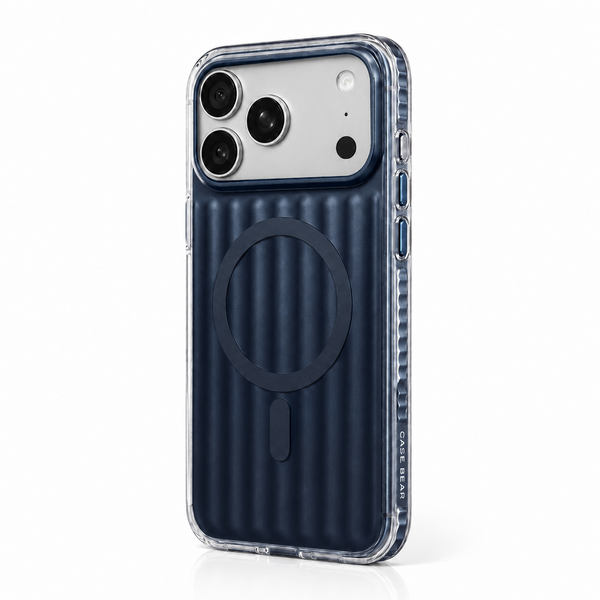
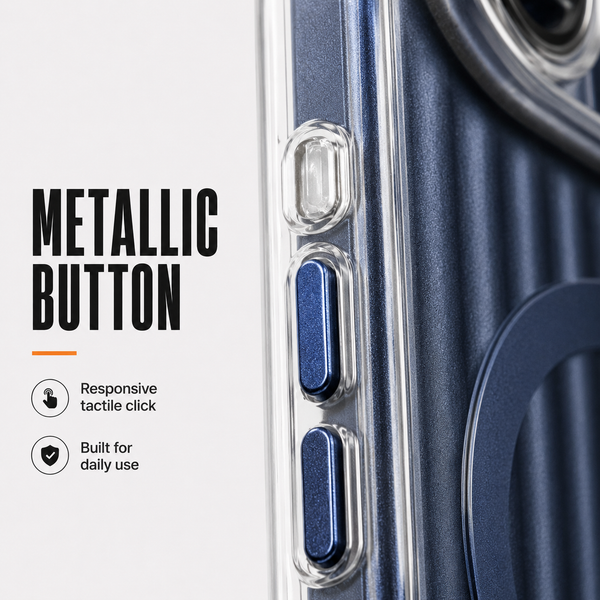
Metal buttons are a small phone-case detail with an outsized effect on daily use. They sit between your finger and the phone's actual controls, so their shape, movement and fit can change how deliberate each press feels. They also create a cleaner visual finish than a rough cutout when the case is engineered around them.
This guide explains what an iPhone case with metal buttons is, how it differs from a simple opening in the side wall and which details matter when comparing leather-finish or premium-looking cases.
What "metal buttons" means on a phone case
A case with metal buttons uses separate button pieces positioned over the phone's physical controls. The outer piece may be aluminium or another metal, while the case body holds it in alignment. Pressing the outer piece transfers movement to the phone button beneath it.
This is different from three other common constructions:
- Open cutout: the phone button is exposed through a hole.
- Moulded cover: the case material forms a flexible cover over the button.
- Decorative insert: a separate part is visible but may not provide a precise press.
The word "metallic" can describe a colour as well as a material, so product information should clearly state whether the button itself is metal. CaseBear's Leather Classic collection uses machined controls and describes the intended result as a crisp, responsive click.
Why button feel matters
People use the side and volume controls many times a day. A thick or poorly aligned cover can make a press feel vague. A well-fitted separate button can provide a more defined point of contact while keeping the case edge visually continuous.
Button feel depends on more than the material. The outer button needs the correct travel, the case wall must hold its position and the inner contact must line up with the device. A metal part cannot compensate for a case made for the wrong model.
The most useful premium detail is one you notice during ordinary use, not only in a product photograph.
Metal button case versus open button cutout
| Detail | Separate metal control | Open cutout |
|---|---|---|
| Side appearance | Continuous and finished | Phone button remains visible |
| Finger contact | Touches the case button | Touches the original phone button |
| Fit sensitivity | Needs precise alignment | Needs a correctly sized opening |
| Material contrast | Can add a deliberate accent | No added button material |
Neither construction is automatically better for every person. Some users prefer direct access through a cutout. Others prefer the uninterrupted side profile and tactile definition of a separate control. The deciding factor should be model-specific fit and comfortable operation.
What to inspect before buying
- Exact model name: iPhone 17, iPhone 17 Pro and iPhone 17 Pro Max are not interchangeable.
- Button alignment: product images should show the controls sitting squarely in the side wall.
- Case thickness: the buttons should remain easy to locate without projecting awkwardly.
- Camera-control access: if your phone has an additional control area, check how the case handles it.
- Material honesty: confirm that the product describes machined or aluminium buttons rather than only a metallic colour.
Why metal controls suit a minimal leather case
Leather-finish cases are often chosen for a refined, understated look. A separate metal control can echo the phone's hardware and create a small, precise point of contrast. That works best when the rest of the case remains restrained: a clean back, controlled edge thickness and a camera surround that follows the device.
Browse the current CaseBear leather-finish iPhone cases to see the available colours and device fits. For a broader comparison of surface feel, read Leather vs Silicone vs TPU. The visible finish is only one part of the decision; grip, maintenance and construction also matter.
Metal does not automatically mean bulky
A metal control is a component, not a requirement for a thick case. A slim case can still use separate buttons if the side wall, internal contact and outer piece are engineered as a set. Conversely, a bulky case can still have poor button feel if those elements do not align.
When searching for a premium iPhone case with metal buttons, pair the feature with practical qualifiers: exact model, slim profile, raised camera edge and comfortable grip. This produces a more useful comparison than treating "premium" as a standalone specification.
Finish and colour still need to work together
A bright metal accent can be attractive, but it should not look disconnected from the case body or the phone hardware. Black, silver and colour-matched controls create different results. Product images should show the buttons in ordinary light and from the side, where their height and alignment are easier to judge. Also check whether every control uses the same construction; a product may use a separate piece for volume and power while treating another control area differently. A consistent visual language is part of the premium effect, but comfortable operation remains the more important test.
Quick answers
Are metal case buttons the same as the phone's buttons?
No. They are external case components that sit over the phone controls and transfer the press.
Do metal buttons guarantee a better click?
No single material guarantees good operation. Alignment, travel and model-specific fit are equally important.
Can an iPhone case with metal buttons still be minimal?
Yes. Separate controls can be integrated into a slim side wall and used as a restrained design detail.
Where can I find CaseBear cases with machined controls?
The current Leather Classic collection is the relevant CaseBear family. Check each product page for your exact phone model and colour.
Shop Leather Classic cases with machined controls or read the minimal iPhone case guide for a wider design comparison.


About the author
CaseBear Editorial
CaseBear Editorial tests materials, fit and everyday usability to help customers choose with confidence.
Sources and review
Product-specific claims are reviewed against current CaseBear specifications. General guidance is educational and may vary by device and use.